
For SaaS companies
Paid ads for SaaS, followed to the customer who pays
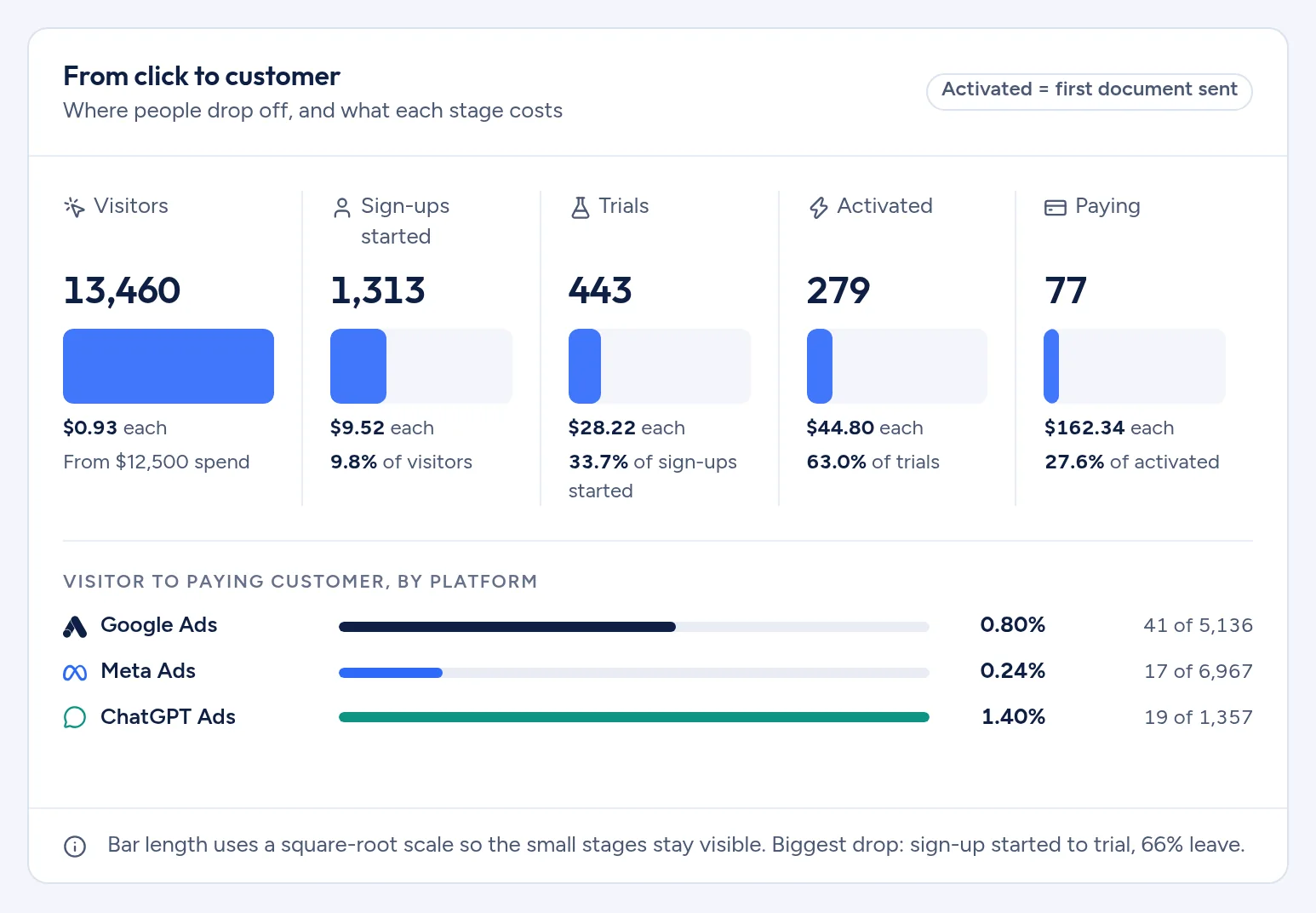
A SaaS sale is not finished at the click. Someone signs up, starts a trial, becomes active, and pays days or weeks later. Ad platforms report the click and the sign-up. ReadyLift follows each visitor to the first payment and tells you what a paying customer cost on every platform.
Where ad reporting stops short for SaaS
- The sale finishes later
- A paid sign-up can arrive days after the click. A Visit ID ties it back to the ad and the page version, and the dashboard says how late a payment can still arrive.
- A sign-up is not a customer
- The funnel counts visitors, sign-ups started, trials, activated and paying, with the cost of each stage. It names the biggest drop.
- One payment is not the value
- A subscriber pays every month, so the first payment says little. ReadyLift reports CAC, LTV to CAC and the months it takes to earn a customer back.
- Customers are not worth the same
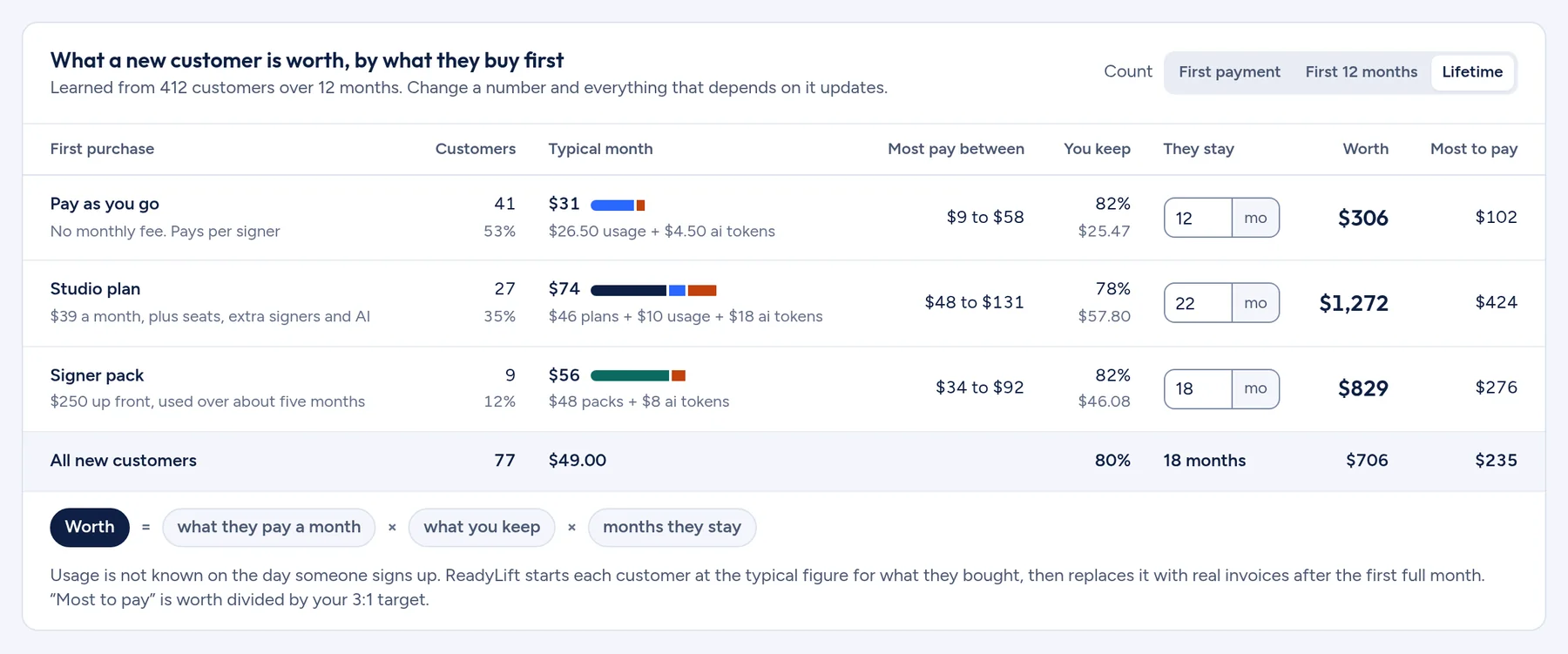
- A small plan, a larger plan and a usage-heavy account are worth different amounts. Each new customer is valued by what they buy first.
The six figures a SaaS founder asks for
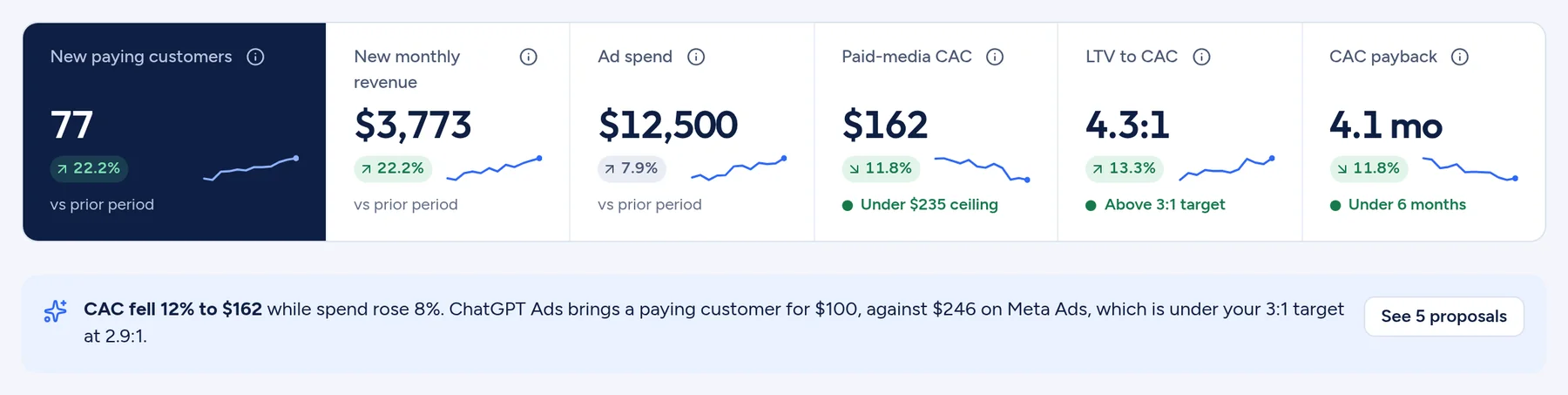
New paying customers, new monthly revenue, ad spend, paid-media CAC, LTV to CAC and CAC payback. Each one is compared with the period before and judged against your own targets, with the same definitions on every ad platform.
Every stage has a source
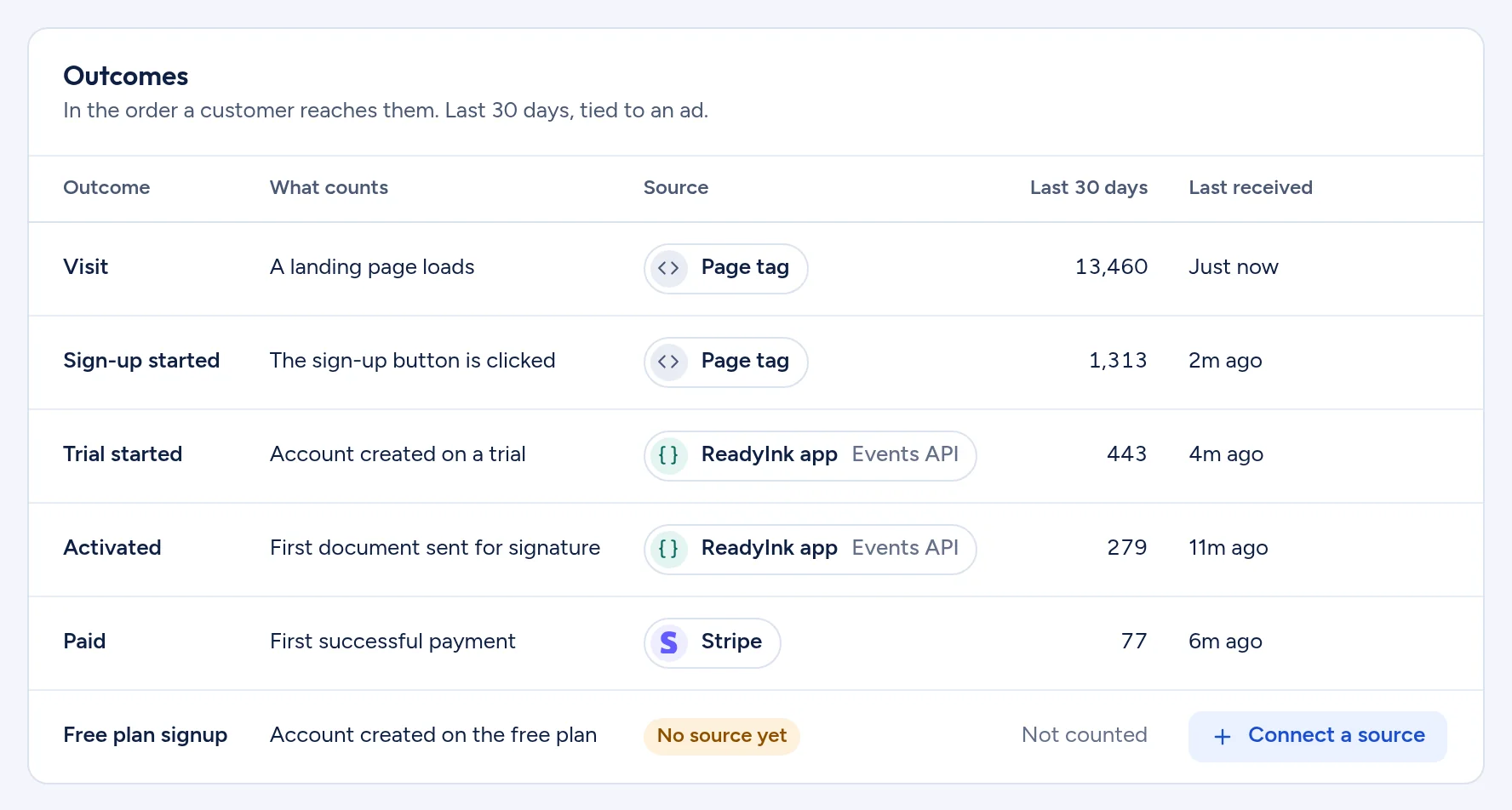
- Visit and sign-up started
- The page tag built into every ReadyLift page.
- Trial started and activated
- Your own product, through an MCP server, the Events API or a webhook.
- Paid
- Stripe, on the first paid invoice for a customer.
A CAC ceiling from your own pricing
ReadyLift reads your pricing page, billing catalog or past invoices and works out what each kind of customer is worth after costs. The most to pay for one is that worth divided by your target LTV to CAC.
Every campaign carries the ceiling as a guardrail. When a customer costs more, the agent pauses the campaign and asks you.
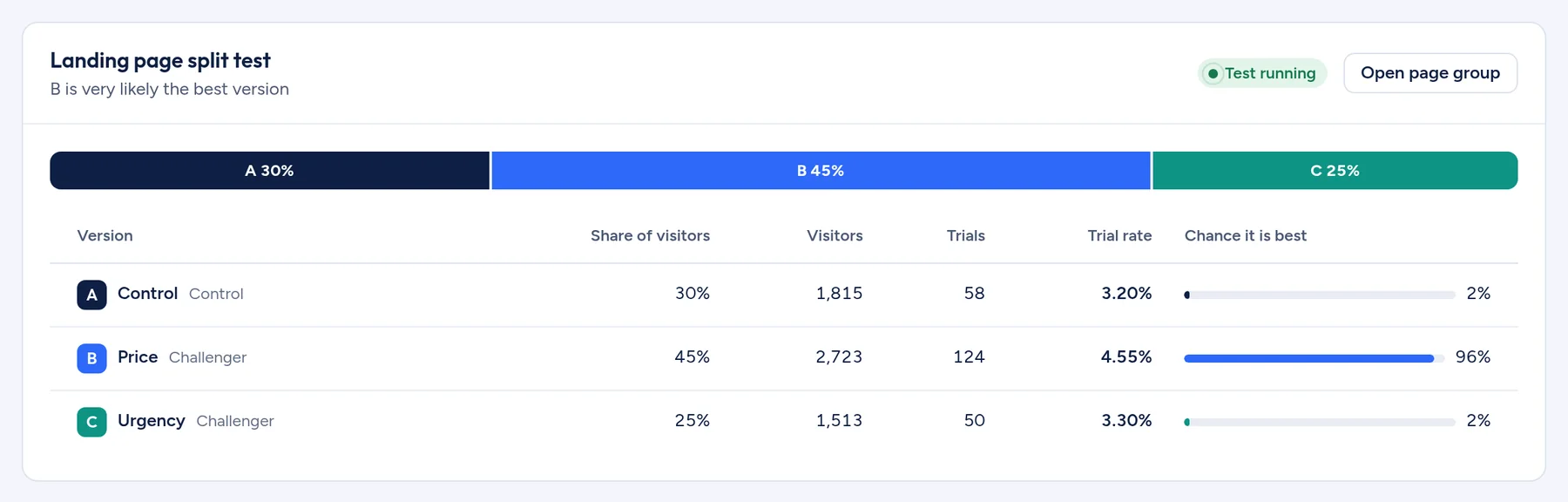
Ads and landing pages A/B tested on trials and payments
Up to three versions of the ad run side by side on each platform, and two or three versions of the page share one address on your own domain. Both are judged on the outcome you chose, such as trial started or paid, so an ad or a page that only wins clicks does not win the test.
See A/B testing for ads and landing pages
An agent that knows a trial takes time
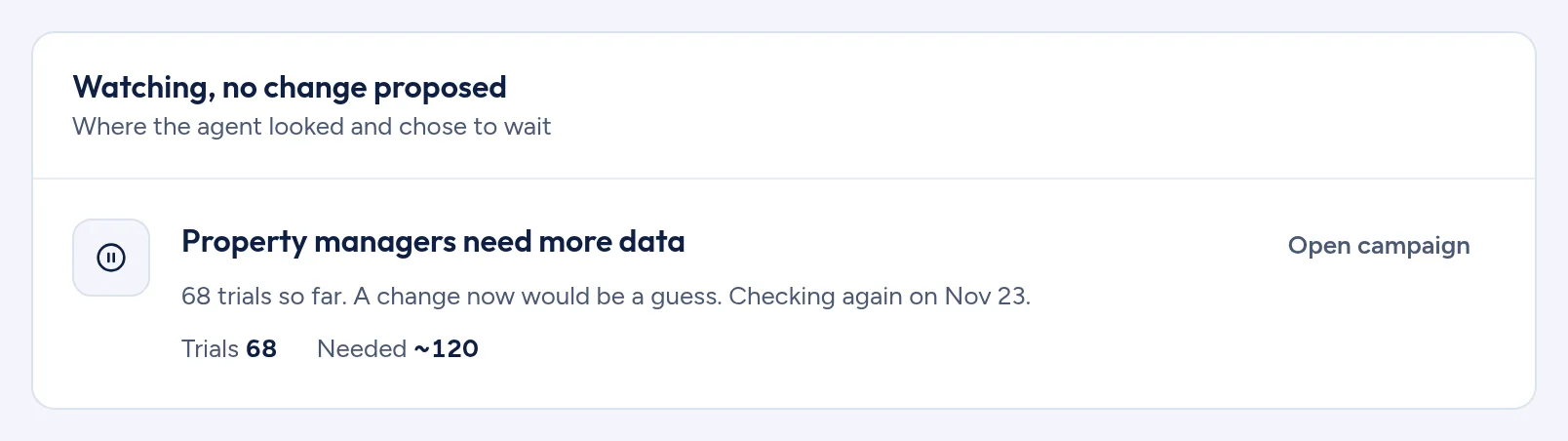
The agent reads your ad accounts, pages and payments every morning and proposes specific changes for you to approve. It waits for enough data before judging a campaign, says where it is waiting and why, and never raises your total daily budget.
Questions
Before you ask
Does ReadyLift work with free trials and free plans?
Yes. Stripe only sees what is billed, so a free plan or a trial with no card is reported by your own product through an MCP server, the Events API or a webhook. Stripe then supplies the first payment.
What if our billing is not in Stripe?
Send the Paid outcome from your own server with the Events API, or from a billing tool that can send webhooks.
How long before a campaign can be judged?
That depends on how long your trial runs and how many trials a campaign starts. The agent waits for enough data before it proposes a change, and it lists the campaigns it is still watching.
Which ad platforms can a SaaS campaign run on?
Google Ads, Meta Ads, LinkedIn Ads, ChatGPT Ads and TikTok Ads. LinkedIn Ads reaches business buyers by job title, company size and industry. One campaign carries the same message to each platform you connect, and all of them are measured with the same definitions.
Can we A/B test the ads as well as the landing pages?
Yes. A campaign can test up to three versions of the ad and two or three versions of the page at the same time. Both are judged on the outcome you chose, and results can be read by ad, by page or by the two together.
Go deeper
See what your ads are really buying
ReadyLift.ai is opening to a first group of SaaS and AI companies. Tell us where you advertise and we will be in touch.